









Aesthetic gaming PCs: the five kinds, and the details that make each one work (2026)

Short answer: aesthetic gaming PCs fall into five kinds, and each one lives or dies on a different set of details. Kawaii builds are about packaging and play. Fantasy builds are about materials and light. Retro builds are about silhouette. Creator collabs are about a world carried onto the case. Artisan builds are about the hands that made them. Pick the kind that suits the room and the person first, then check how the look was made, because that decides whether it still looks right in three years.
Why aesthetic gaming PCs went mainstream
For twenty years the gaming PC came in one shape: a black tower with a window and a light show. That is fine if your desk is in a spare room. It is less fine when the PC sits in the living room, on a stream, or next to a monitor you chose because it matched the shelf. Somewhere around the pastel keyboard boom, people started asking why the biggest object on the desk was the only one with no personality. The answer came in several distinct styles, and it helps to know which one you are actually shopping for.
1. Kawaii and snack builds
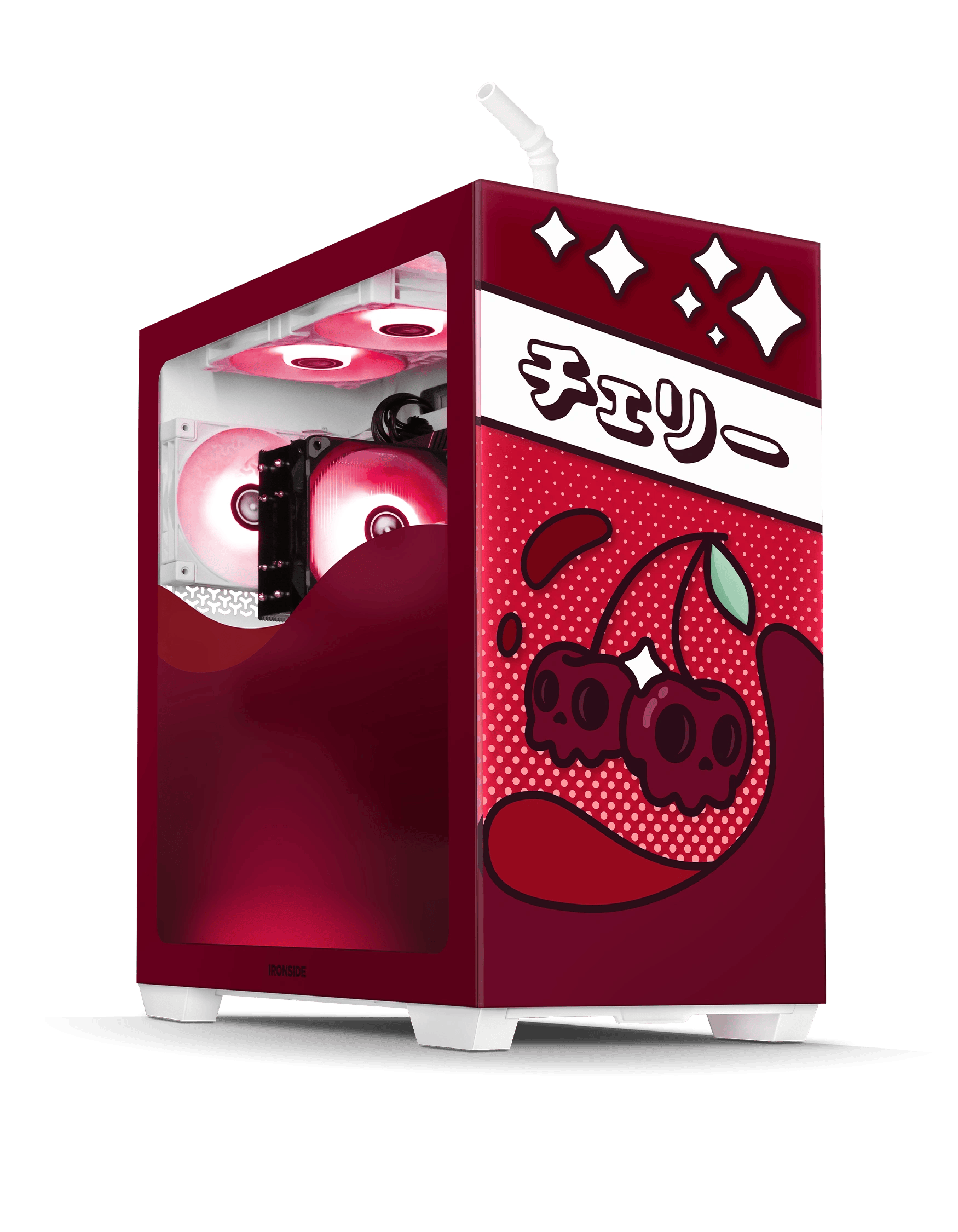
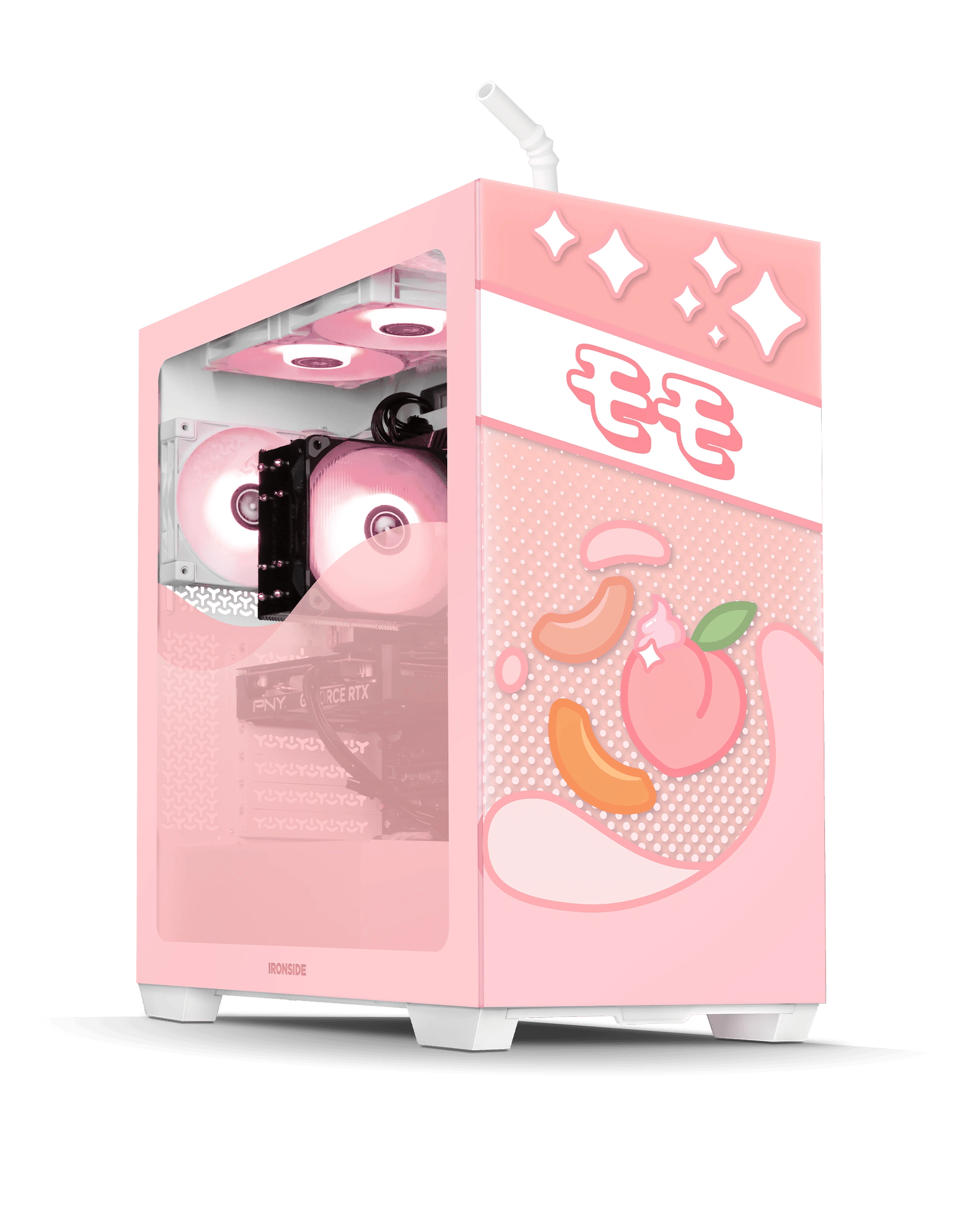
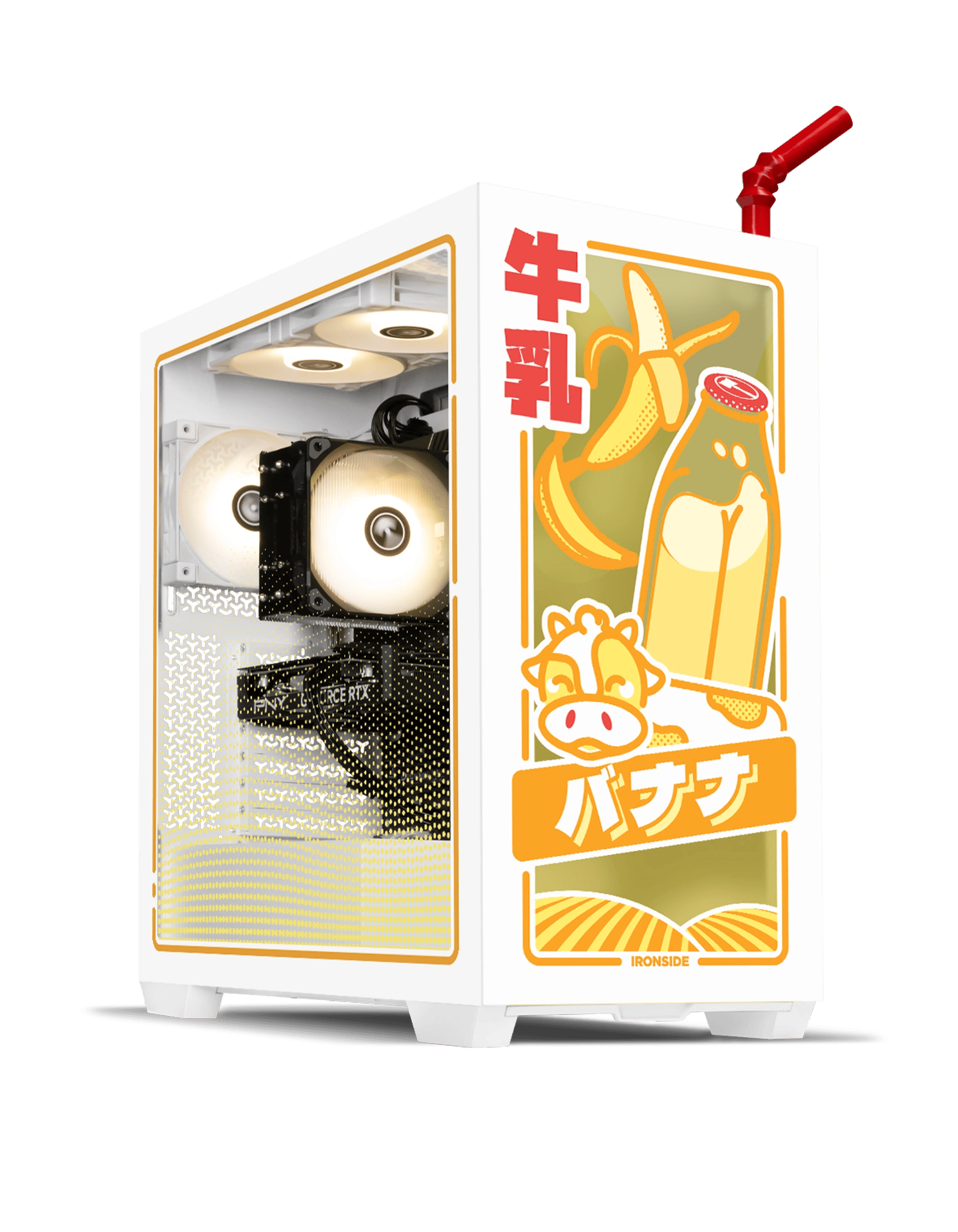
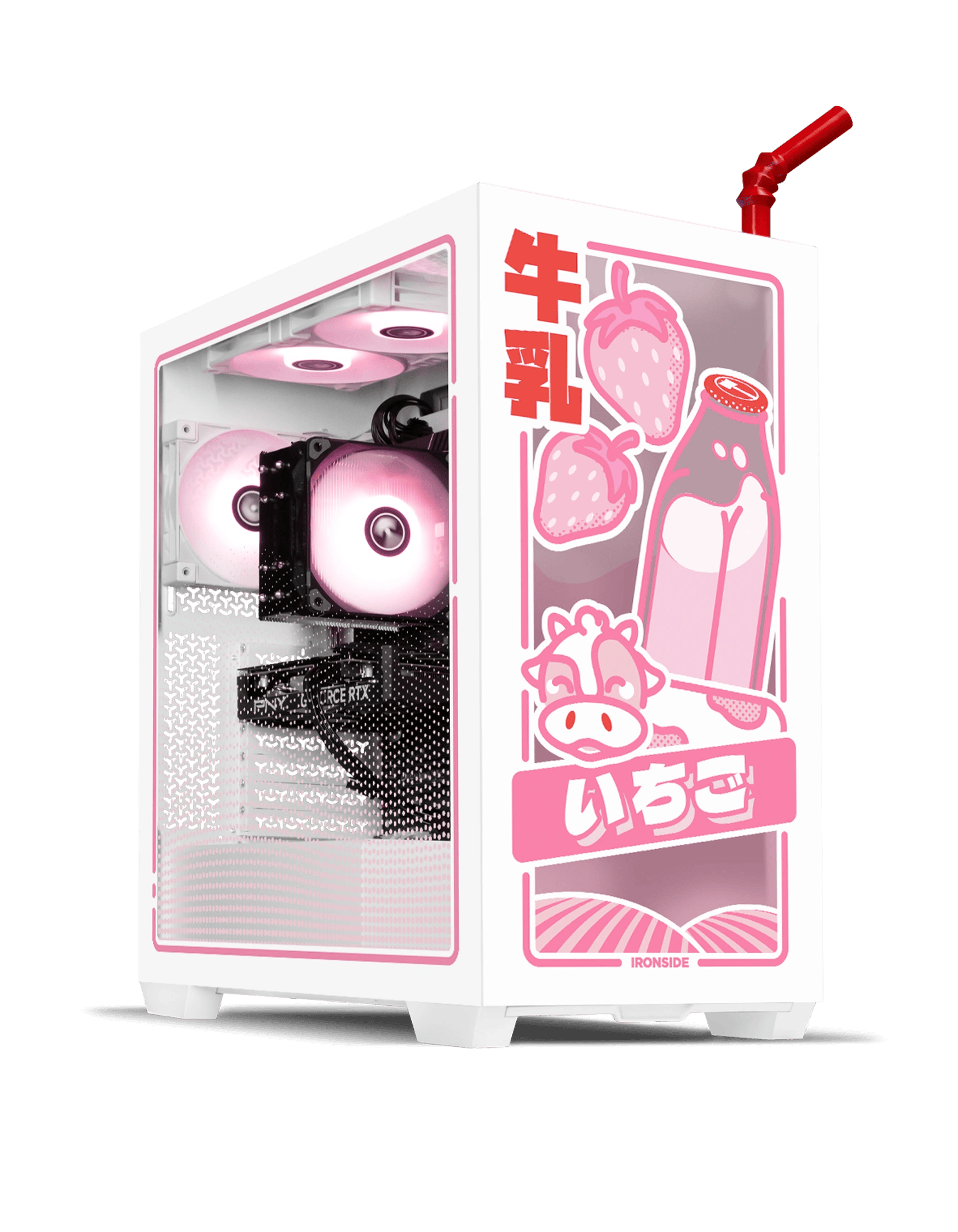
The playful end of the scale: a PC dressed as something you would find in a convenience store. Pastel palettes, rounded lettering, mascots, and a design that wraps around the whole case rather than stopping at the side panel.
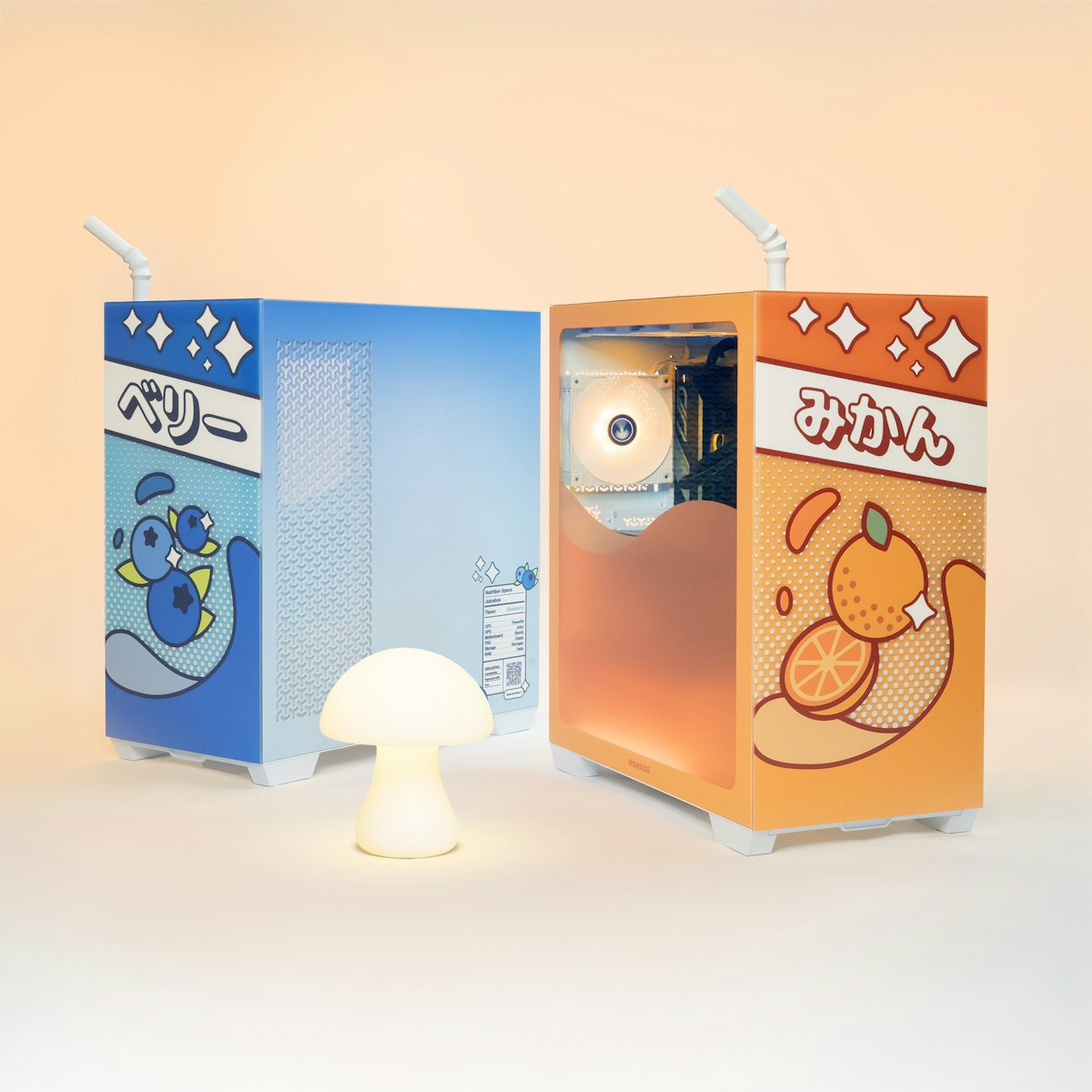
The details that make it work: the artwork is illustrated for the case, not borrowed, and it continues onto the top, back and sides. The Juicebox is fully UV printed on glass and metal from illustrations made in house, comes in six flavors, and carries a magnetic straw that snaps on with a click and comes off for transport. The Milkbox does the same trick as a carton, with the nutrition specs printed on the side and a print that will not scratch or peel.
What to check: turn it around. A kawaii build that is only decorated from the front is a sticker with ambitions. Look for accessories that belong to the design (straws, matching keyboard sets) rather than generic RGB.
2. Fantasy and nature builds
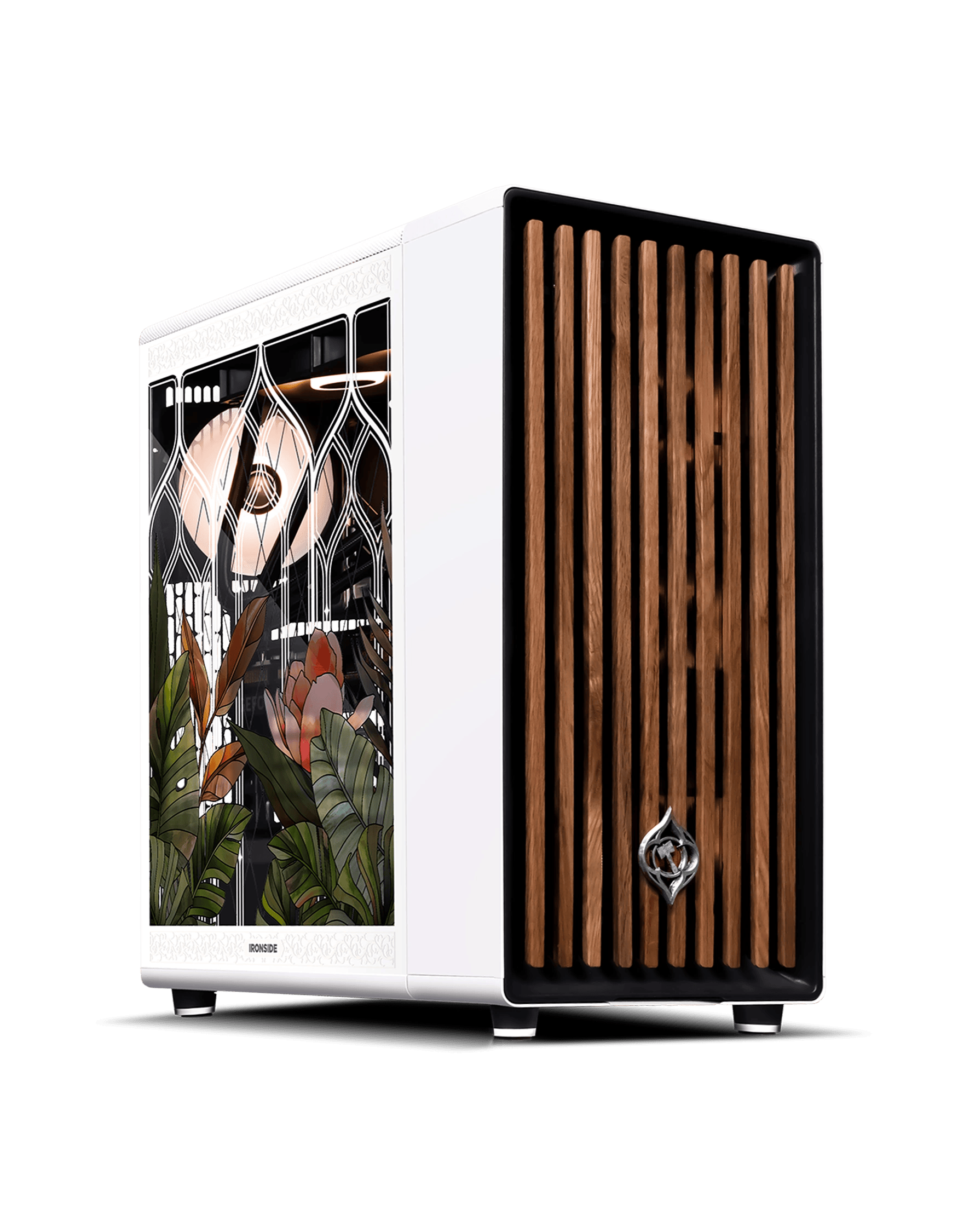
Darker palettes, organic shapes, and light that seems to come from inside the case. This kind borrows from stained glass, old libraries and forests rather than from games, which is why it suits rooms where a neon tower would look wrong.
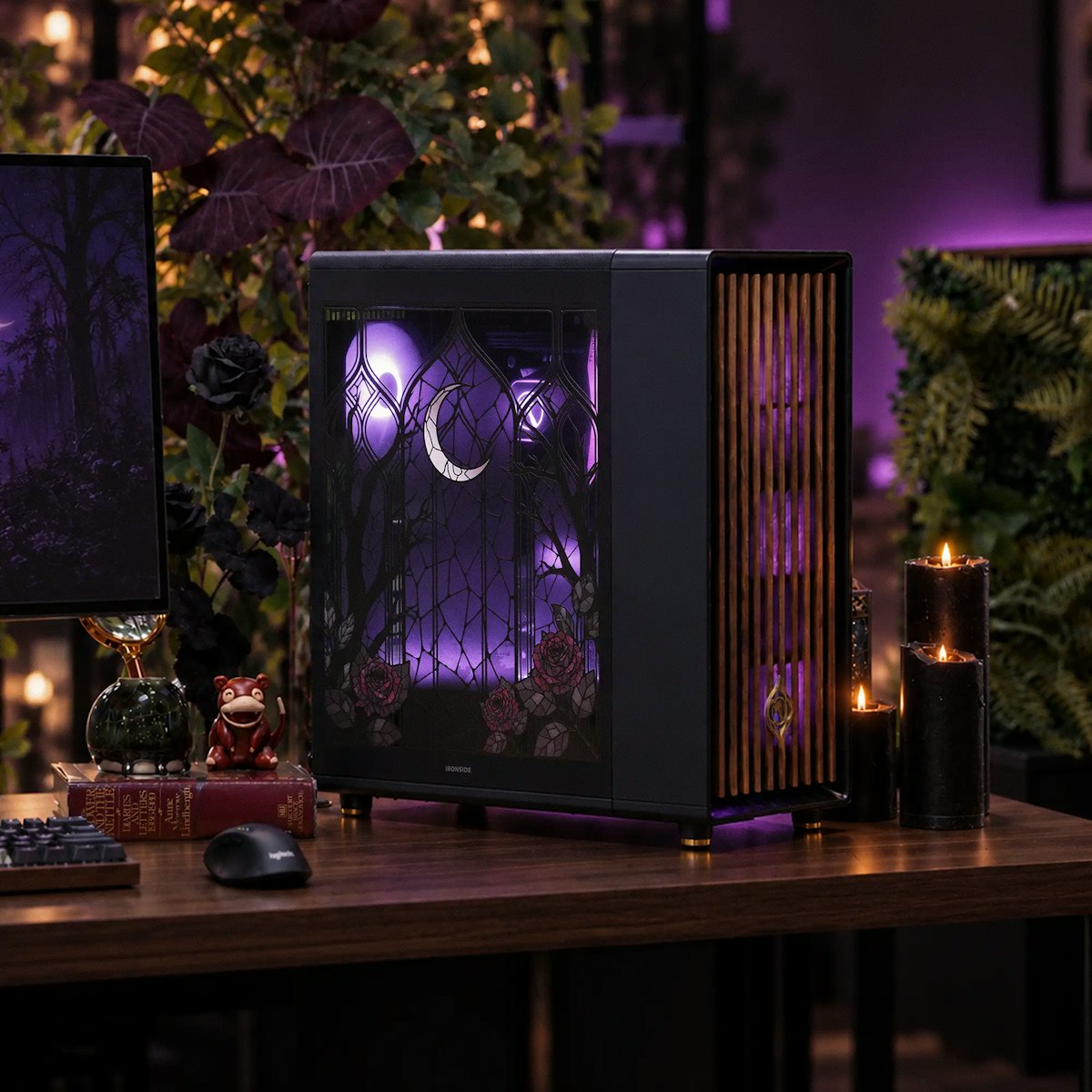
The details that make it work: real materials and depth. Eden's Veil prints its botanical stained glass pane by pane so the glass front has actual depth, the front slats are cut from real oak or walnut, and the sigil on the front is painted by hand in gold or silver, deliberately aged. It ships in five finishes, including seasonal editions like Widowbloom, so the collection changes with the year.
What to check: whether the wood is wood. Printed wood grain is the most common shortcut in this style, and it shows at the edges.
3. Retro and nostalgia builds
Here the design is in the shape as much as the surface: boxy forms, rounded windows, control panels, beige and cream, the computing that a certain generation grew up wanting.
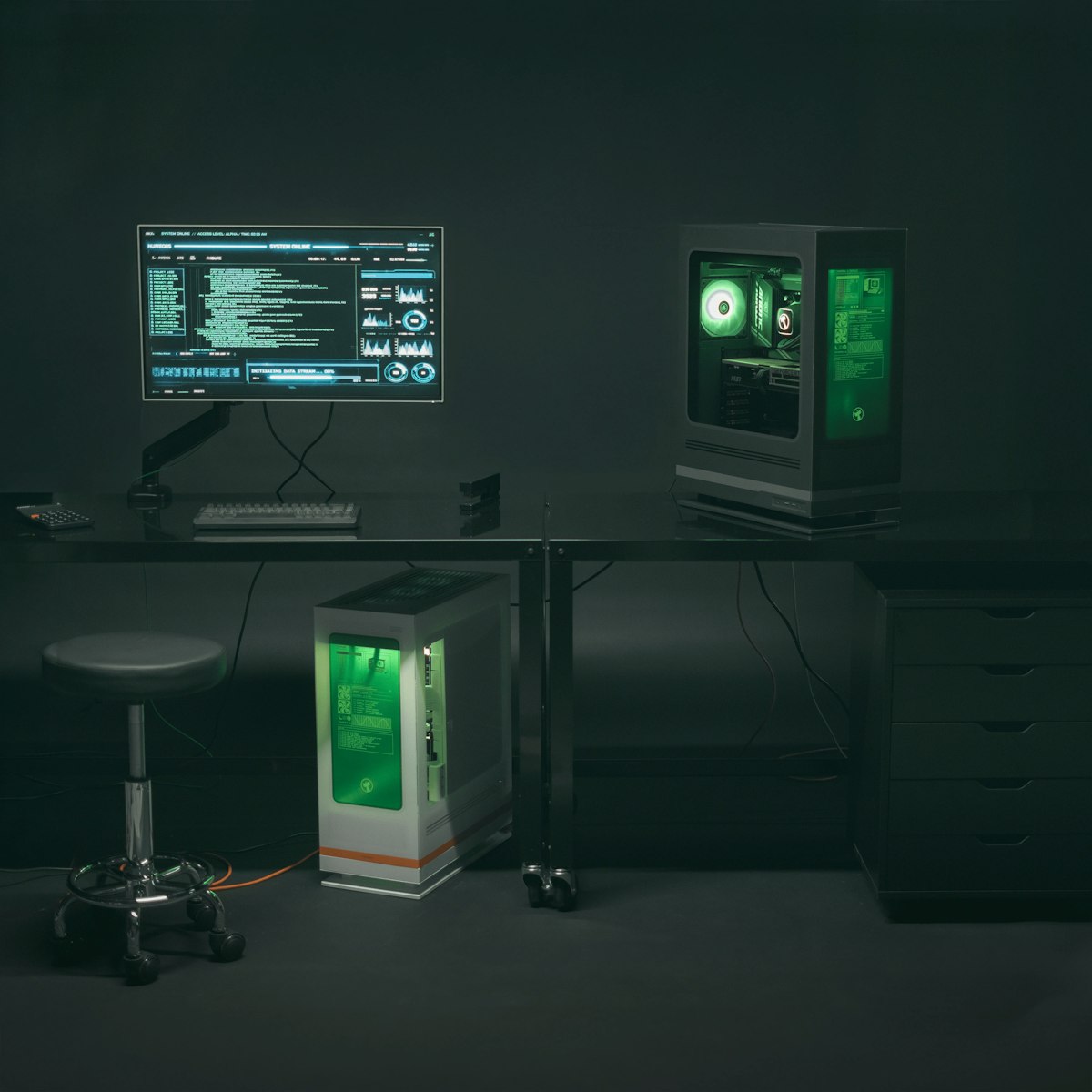
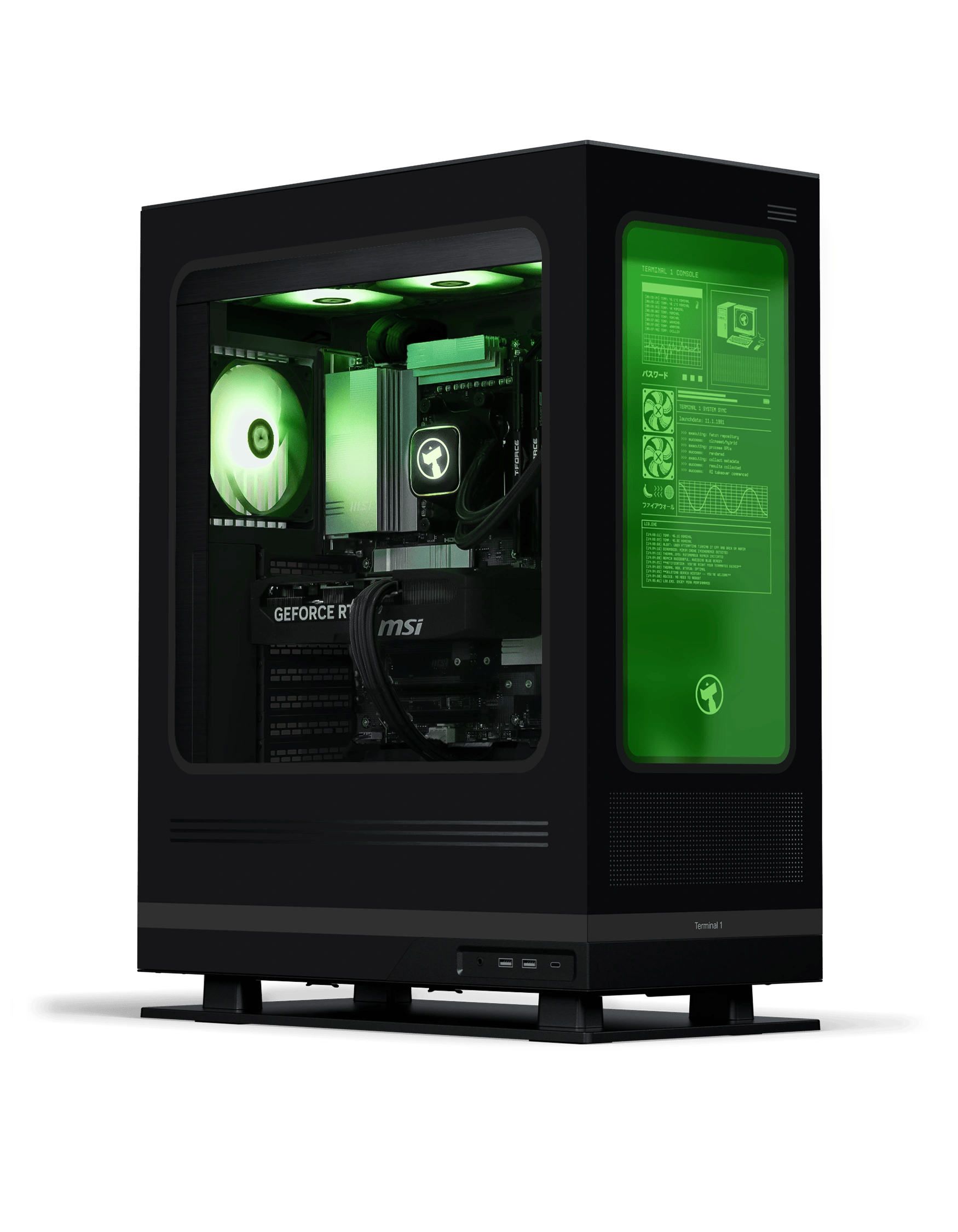
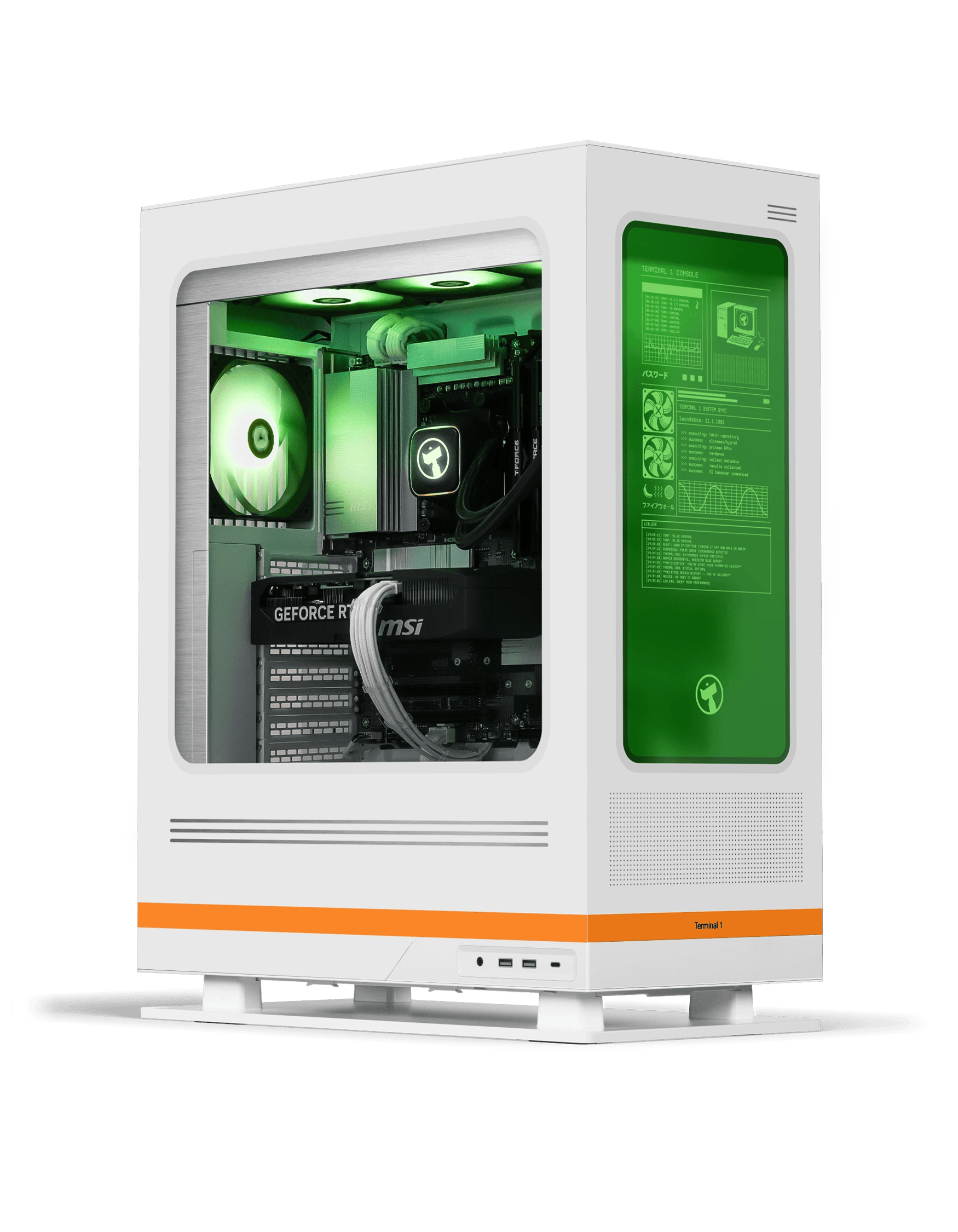
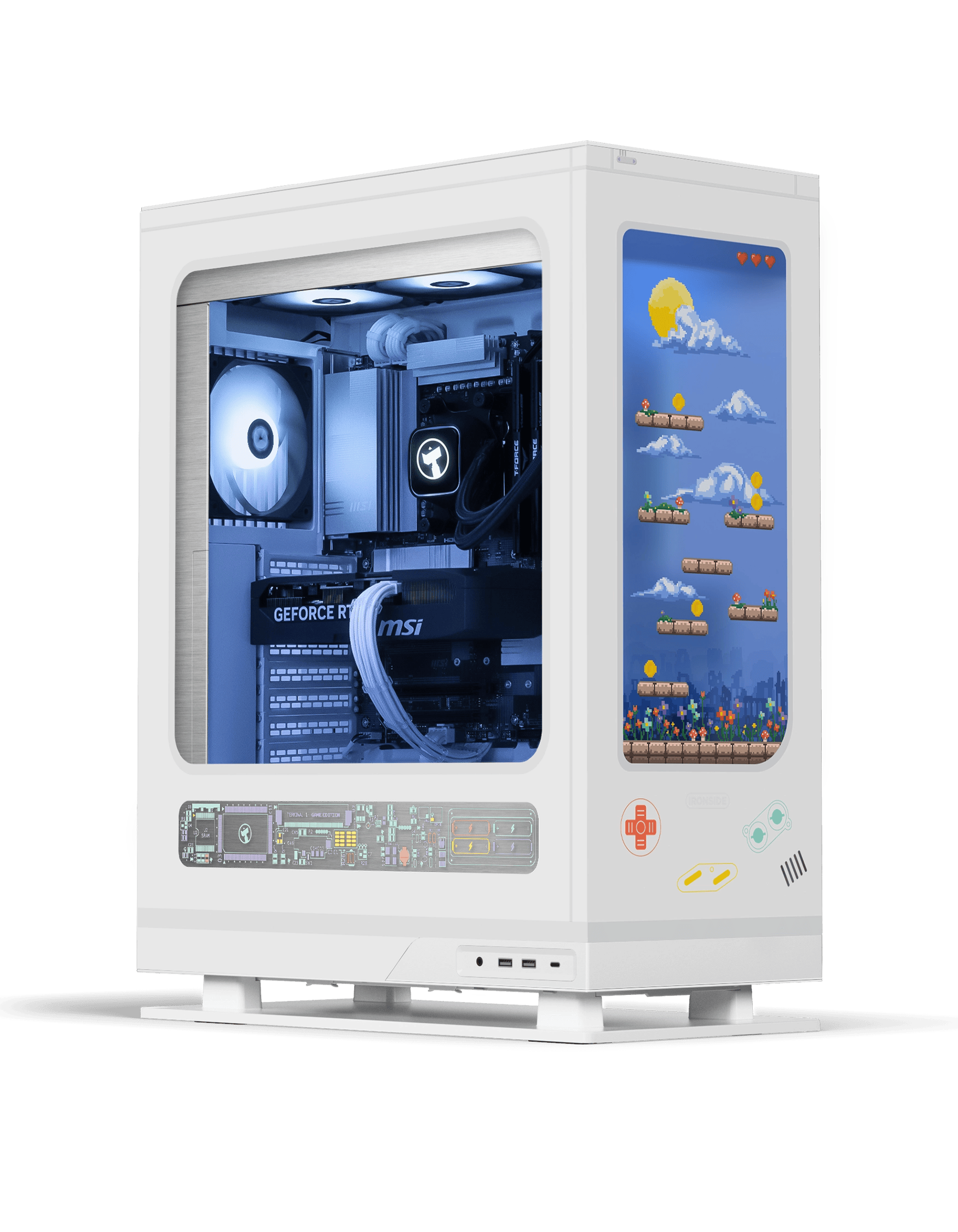
The details that make it work: commitment. The Terminal 1 is a midcentury machine down to its silhouette, with every panel printed directly onto the chassis and a green control panel covered in tiny text, interface glyphs and references hidden for people who read the fine print. It comes in black, white and two special editions.
What to check: the shape. A retro print on a standard modern tower reads as a costume. A retro form with a modern interior reads as a design.
4. Creator and collab builds
A streamer's or artist's world translated onto a case, usually in a limited run. The best ones are made with the creator, not just licensed from them, and the art is adapted to the case rather than pasted on.
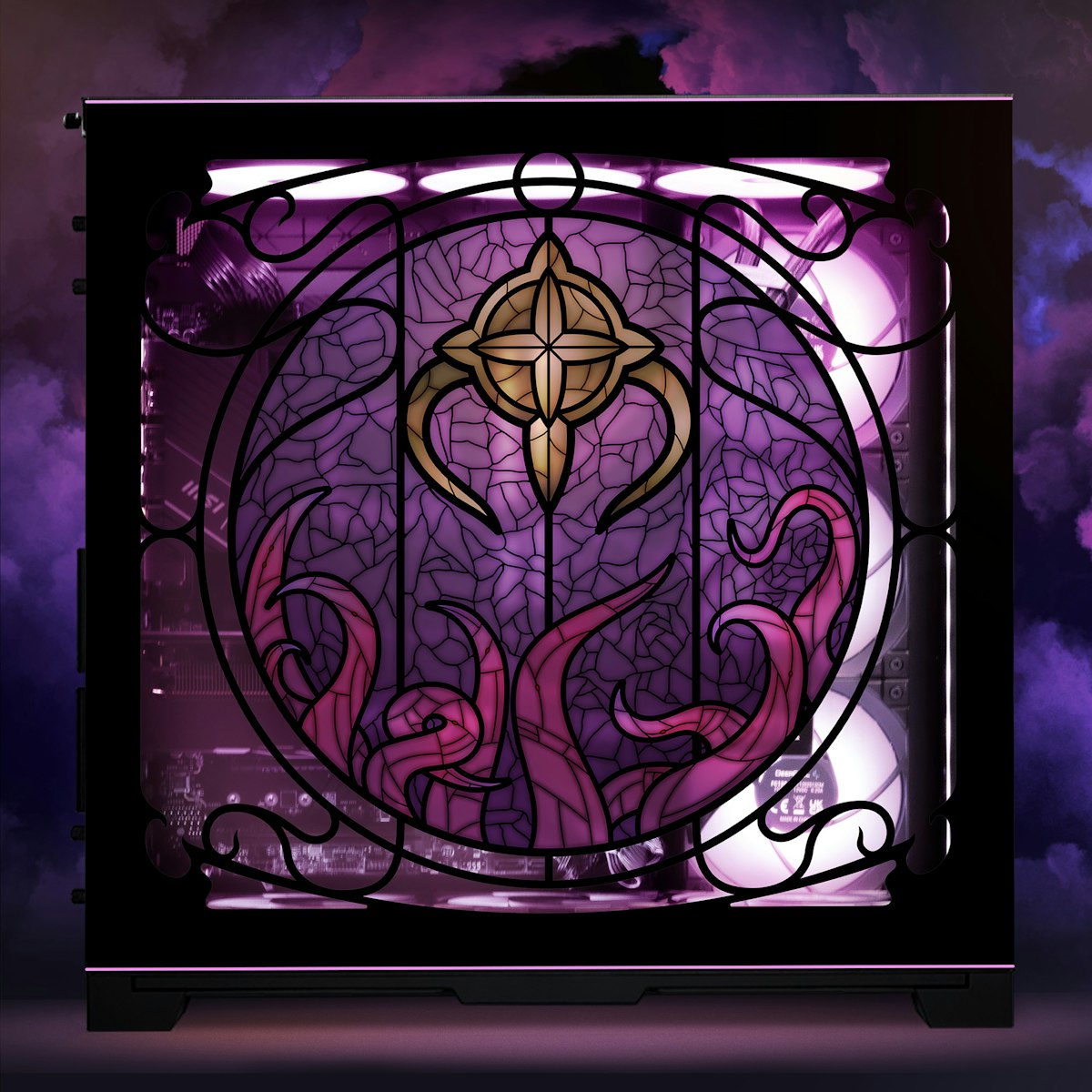
The details that make it work: the theme carries across the whole build. The Nyanners collab runs its eldritch tendrils and lunar motifs across both glass panels in a stained glass style, so the case reads as one piece from either side. Lord Aethelstan does the same with a castle.
What to check: limited means limited. Ask how many were made, and whether the creator was involved in the design or only the name.
5. Artisan one of a kind builds
The top of the scale: not a themed case but a sculpture that happens to contain a computer. Nothing is repeated, and the price and wait reflect that.
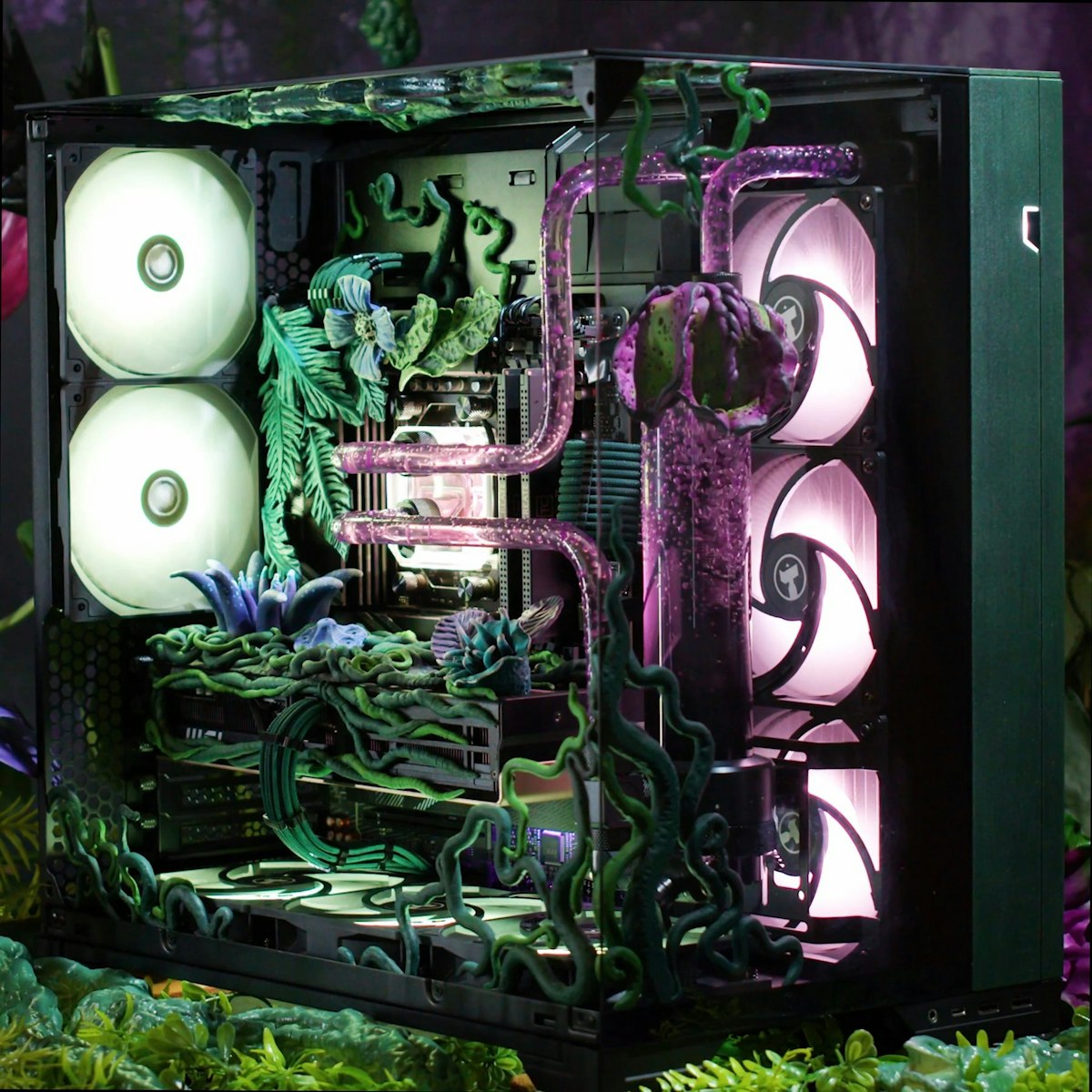
The details that make it work: the hands. On the Legend of Etroo, from the Masterworks line, the vines and foliage begin as polymer clay, sculpted, refined and painted by hand, and become a permanent part of the build. Glow in the dark resin droplets are mixed by hand, applied to the tubing and reservoir one by one, then UV cured to hold their shape. Lilac coolant, a hand sculpted magnetic canopy and custom painted cable sleeving finish it. Every piece is made by our artist in our studio.
What to check: who made it, and whether they will make it again. A one of a kind build should come with a name attached and a story you can verify.
How the looks are made, and why it matters
Across all five kinds, three methods do most of the work. UV printing cures ink straight into glass or metal, holds fine detail, and survives the warm and cool cycles inside a running PC. Hand painting is slower and slightly different every time, which is what you want for a sigil or a sculpture and not what you want for an illustration. Sculpting and finishing, with clay and cured resin, is the artisan tier. The one to avoid is the vinyl wrap.
| Method | How it holds up | How to tell |
|---|---|---|
| UV printed glass or metal | Cured into the surface. Does not peel or lift at the edges, and it cleans with a cloth. | The listing says printed, and close up photos show no edge seam. |
| Hand painted or sculpted | Each one slightly different. Durable when clear coated, and repairable by the person who made it. | The builder shows the process, and it is priced like the work it is. |
| Vinyl wrap or decal | Looks identical on day one. Edges lift with heat cycles, and it scratches like a sticker because it is one. | Corners in the product photos, and the word "wrap" or "skin" anywhere. |
Two checks that apply to every kind
It still has to breathe. A themed panel is often a solid panel. That is fine where the art lives, as long as air comes in through a mesh or slatted front and leaves at the top or back. Ask for a photo with the panels off; a builder proud of the airflow will have one.
Someone has to stand behind it. A company that designs its own cases and builds every machine can cover the whole thing. Ironside's standard warranty is lifetime labor and three years on parts, and it covers the entire computer because every one is built and tested by us in Texas.
Pick the kind, then the parts
The look and the performance are separate decisions. Every Ironside design is configured part by part, so a Juicebox and an Eden's Veil can carry exactly the same hardware. If none of the five kinds is for you, the Ironside Series is the same build quality without a theme, and it ships in two days.
Frequently asked questions
What are the main types of aesthetic gaming PCs?
Five, broadly: kawaii and snack themed builds, fantasy and nature builds, retro and nostalgia builds, creator collabs, and one of a kind artisan builds. They differ in palette, in what the design is made of, and in how many exist.
What is a kawaii gaming PC?
A PC designed like something playful and collectible, usually food packaging or a mascot, in pastel colors with rounded lettering. The good ones are illustrated for the case, printed on every side and finished with accessories that belong to the design, like a magnetic straw.
Are anime and collab gaming PCs just stickers on a normal case?
Some are. The difference is whether the art was adapted to the case and printed into the panels, or cut as a vinyl wrap and applied on top. Wraps lift at the edges after a few months of heat cycles; printed panels do not.
Do aesthetic gaming PCs cost more?
The case work does. Printing, painting and sculpting take time and skill that a stamped black tower does not, while the parts inside cost the same. Compare builds on the parts list first and treat the design as the extra you are choosing to pay for.

Written by
Founder & CEO
Founder and CEO of Ironside Computers. Robert started the company with three siblings and has designed and built custom gaming PCs ever since, signing off on every new case design and build spec before it ships.